

If your home or building along the Front Range has a flat or low-slope roof, TPO has probably come up in at least one quote. It’s the most widely installed single-ply membrane in the country, and it earned that spot honestly. It isn’t right for every roof, though, and the gap between a good TPO roof and a bad one is wider than most owners expect. Here are the TPO roofing pros and cons that change your decision, a run-down of what Colorado weather does to a membrane, and what to ask before you sign.
Jump To A Section
What Is TPO Roofing?
TPO roofing is a single-ply membrane made from thermoplastic polyolefin, a blend of polypropylene and ethylene-propylene rubber. It comes in wide rolls, usually white, and gets rolled out over a layer of insulation on your flat or low-slope roof deck.
Your TPO roof system can be broken down into three key parts. The insulation board, the sheet, and the weathering layer. The insulation board sits on the deck and carries most of the R-value. Above it, the sheet holds a polyester scrim through the middle for strength. Your weathering layer on top then takes the sun, the hail and the foot traffic; protecting your roof for years to come.
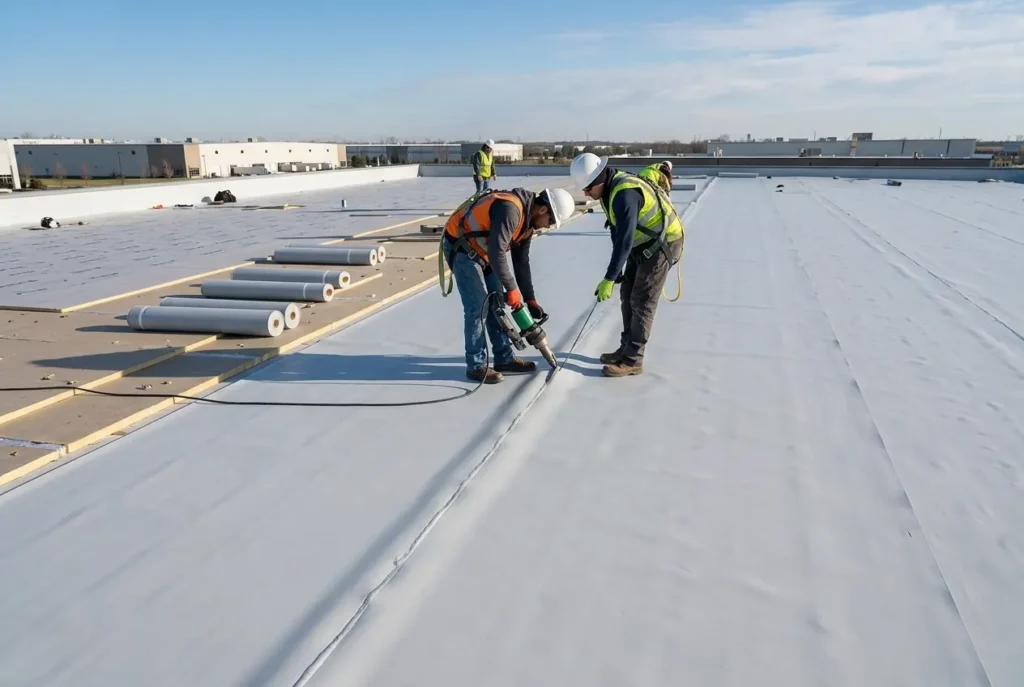
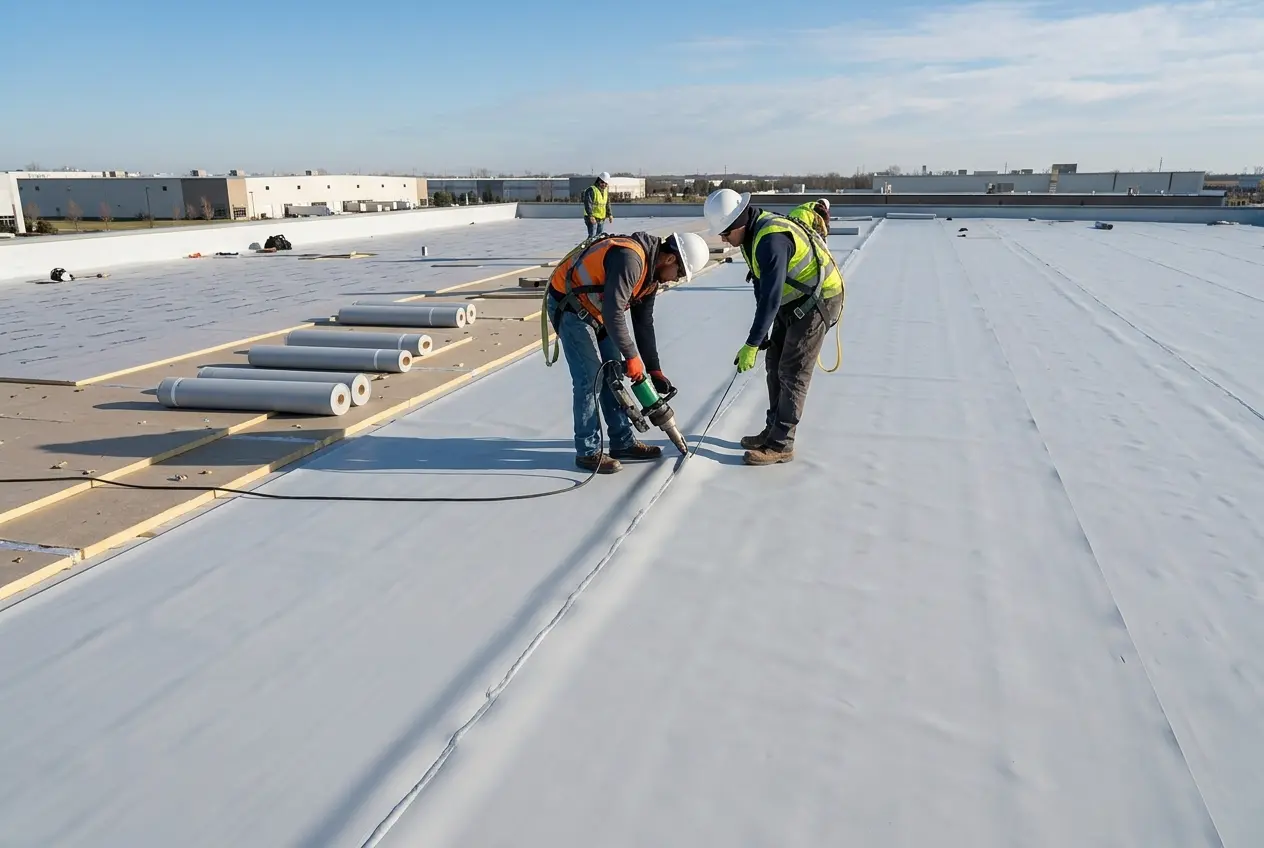
What separates TPO from older flat-roof systems is the seam. Instead of adhesive or tape, installers run a hot-air welder down the overlap and fuse the two sheets into one piece of plastic. There’s no glue line left to peel.
Considering TPO roofing for your property? You’re in good company. Our roof installation crews see this type of roof all across the metro.
The Pros Of TPO Roofing
TPO took over the low-slope market by solving several problems at once:
It serves as a reflective surface that lowers your cooling load. A white TPO roof membrane is a cool roof in the technical sense. It sends most of the sun’s energy back into the sky instead of letting the building below absorb it.
The Department of Energy’s cool roof guidance puts a conventional roof at 150 degrees or more on a sunny afternoon, and a reflective roof more than 50 degrees cooler. That gap matters more here than at sea level. This is especially true since Denver sits a mile up, and thinner air means more UV on your membrane.
Its seams are welded, not glued. Heat-welded seams are often the strongest part of a TPO roof. The two sheets fuse into one material, so there’s no adhesive to age out and let go.
That matters through a Front Range winter. Water that works into a weak lap freezes, expands and pries the seam wider, and it can do that again every night the temperature drops. A sound weld doesn’t give it the opening, which usually means fewer surprise leaks and fewer calls for roof repair services.
It stays at a price that sits below PVC. TPO landed mid-market as far as pricing goes, and has stayed in that range (for the most part). It typically costs less per square foot than PVC while giving you the same reflectivity and the same welded seam. That’s much of why it became the budget default.
It’s resistant to nearly everything that ages a flat roof. TPO roofing generally holds up against UV, ozone and many chemicals, and the surface resists dirt, punctures and tears. The rolls are wide, so your roof has fewer seams to begin with. The sheet is also light, flexible, and recyclable.
The Cons Of TPO Roofing
No membrane is perfect, unfortunately. Here are some of the cons of TPO roofing to consider before you choose to invest.
TPO roofing quality still varies by manufacturer. TPO is a younger product than EPDM, and formulations still differ from brand to brand. Early generations had documented trouble with weathering and seam durability.
Today, most of that gap has closed. What hasn’t is the distance between the best sheets and the cheapest, so the brand and thickness on your quote matter as much as the word TPO. We stay with the manufacturers we carry for that reason.
The weld is only as good as the person running the welder. When you choose TPO roofing for your project, the roof seams get made on your roof, not in a factory. Weld too cool, and the lap never fully bonds. Weld too hot, and the welder scorches the membrane it’s meant to join.
Thickness gets measured over the scrim, not across the sheet. A TPO roof membrane’s lifespan depends on a measurement most contractor quotes completely gloss over: the thickness over the scrim. This top plastic weathering layer sits above the internal reinforcing fabric and serves as the sole barrier protecting your roof against UV and weather. Research from IIBEC sets the current standard for thickness over scrim at a minimum of 18 mils, or at least 30 percent of the overall membrane thickness. Because of this, two products both sold as 60-mil sheets can carry vastly different weathering protection, making it critical to ask contractors specifically for the thickness over the scrim.
It doesn’t belong on a steep roof. TPO is a flat and low-slope product, full stop. If most of your roof is pitched, asphalt shingles or another steep-slope material is the right call.
How TPO Compares To EPDM, PVC And Modified Bitumen
Choosing the right commercial membrane comes down to how TPO compares against the other standard options your contractor might quote.
EPDM. EPDM is a traditional black rubber roofing membrane. While it is durable, budget-friendly, and backed by decades of proven performance, its dark surface absorbs heat instead of reflecting it, and its seams rely on adhesive tape or glue. On a bright Colorado afternoon, that surface traps significant heat.
PVC. As TPO’s closest alternative, PVC is heat-welded at the seams and offers excellent solar reflectivity. However, it generally carries a higher price tag. That extra investment buys superior chemical resistance, making PVC ideal for restaurants or industrial buildings where grease, oils, or harsh solvents hit the roof.
Modified Bitumen. This multi-layer, asphalt-based system is exceptionally tough and holds up well under heavy foot traffic. Because of its dark composition, it lacks the high reflectivity that makes white single-ply membranes so valuable at high altitudes.
For many Front Range properties, TPO offers the best balance of affordability, reflectivity, and seam strength. That doesn’t make it the universal choice for every project, though. Your roof deck, existing drainage, and current roofing assembly all influence the ideal system for your building.
Is TPO Right For Your Front Range Roof?
TPO is typically an ideal fit in three specific cases: your building features a flat or low-slope roof, you want to lower your summer cooling expenses, and you plan to own the property long enough to see those energy savings accumulate. It’s not the best choice if you’re working with steep-sloped roofs, facilities that require the specialized chemical resistance of PVC, or projects where the budget only covers the thinnest entry-level membranes.
Local building codes influence system selection far more than most property owners anticipate. For instance, the City of Arvada requires a re-roofing permit whenever a property owner replaces more than 100 square feet of roofing material within a single year. Municipal regulations also mandate a mid-roof inspection for flat roof assemblies installed at a 1:12 pitch.
Additionally, municipal codes require adequate slope to ensure the roof drains completely within 48 hours of rainfall or snowmelt. Meeting this requirement can be challenging on near-flat structures, which is precisely where heat-welded TPO systems prove their value. Unlike traditional taped seams that degrade under standing water and freeze-thaw cycles, welded seams create a continuous, watertight barrier.
Lastly, regional weather conditions test the membrane year-round. Dramatic daily temperature swings force the material to expand and contract constantly without splitting, while powerful downslope foothill winds put fastener patterns to the test. You can explore examples of our completed low-slope installations in our project gallery
What You Can Check Before You Sign A Quote
You can evaluate the quality of a flat roof proposal long before setting foot on your roof. The best place to start is with the project specification sheet.
Begin by confirming which TPO membrane the quote specifies and its overall thickness, making sure to ask for the exact measurement over the scrim rather than just the total sheet thickness. Inquire whether the membrane will be mechanically fastened, fully adhered, or ballasted, along with the reasoning behind that recommendation for your building. You should also verify what type of insulation will be installed underneath and the specific R-value it provides to your structure.
Next, clarify whether the scope of work includes a complete tear-off or a recovery over your existing roof, as this decision significantly impacts both project cost and deck inspection opportunities. Confirm how the contractor plans to detail internal drains and perimeter scuppers. You should also make sure the proposal explicitly states that a local building permit will be pulled and clarifies who is responsible for securing it.
While evaluating the proposal is simple, physical inspection and repairs should be left to professionals. Never walk across a wet or frosted membrane, avoid attempting quick fixes on failed welds using tape or caulk, and decline any offers to apply a surface coating over a membrane that is already worn down to the scrim. Foot traffic on cold TPO can easily crease the material, creating hidden stress points that eventually crack under weather exposure.
TPO Roofing FAQs
What are the main TPO roofing pros and cons?
The pros of TPO roofing are that it’s a reflective surface that lowers cooling costs, it uses welded seams that resist freeze-thaw leaks, and it’s known for its UV and puncture resistance. The primary con of TPO roofing is that there’s uneven quality between brands.
How long does a TPO roof last?
A well-built TPO roof membrane commonly lasts around 20 to 30 years when it’s thick enough, welded correctly and maintained. Thin sheets and rushed seams cut that considerably. Thickness over the scrim and workmanship usually matter more than the name on the roll.
Is TPO roofing a good choice for Colorado’s climate?
Generally, yes. The reflective surface handles high-altitude sun well, and welded seams usually hold up to freeze-thaw better than taped ones.
Is TPO or EPDM better?
It depends on what you’re weighing. TPO reflects heat and welds its seams, which usually makes it the better pick if summer cooling costs are your concern. EPDM is a proven, lower-cost rubber membrane that absorbs heat and typically uses taped seams.
Can TPO be used on a house?
Yes. TPO is most common on commercial buildings, but it’s also a reasonable choice for the flat and low-slope sections of a home, such as a modern flat roof, a porch or an addition.
How much does a TPO roof cost?
The total investment for a TPO roof depends on five primary factors: membrane thickness, insulation R-value, the chosen attachment method, whether the project requires a complete tear-off or a simple recovery, and overall job site accessibility. On average, TPO sits comfortably in the mid-market price tier. It offers a more economical option than PVC while remaining close in overall cost to traditional EPDM systems.
Do I need a permit for a flat roof replacement in Arvada?
In almost all cases, yes. According to municipal guidelines from the City of Arvada, replacing more than 100 square feet of roofing material within a single year qualifies as permitted work under their official re-roofing permit regulations. Additionally, flat roof assemblies installed at a 1:12 pitch require a mandatory mid-roof inspection to verify proper installation before completion. A licensed contractor should always secure this permit under their own credentials rather than requesting that you pull it as the property owner.
Talk To Arvada Roofing And Construction About Your Flat Roof
As a family-owned business serving the Denver metro service area since 1996, Arvada Roofing and Construction provides the local expertise your building needs. Our flat roof specialists can evaluate your structure in person and explain your best options, complete with a free, no-obligation estimate. Request your free estimate online or call (303) 432-2753 to get accurate pricing for your roof.