

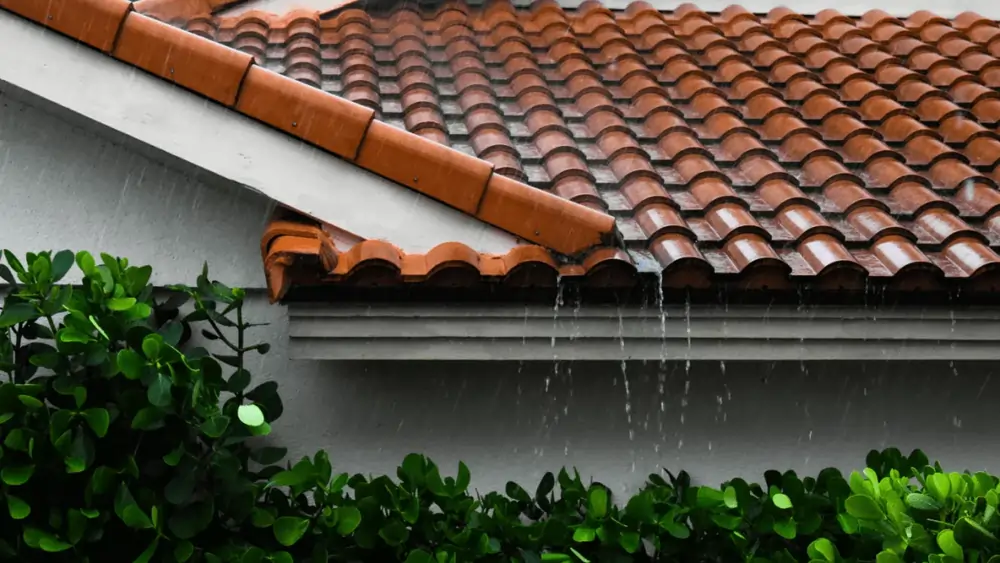
That water stain on your ceiling didn’t exist yesterday. Now it does—and outside, it’s still raining. If your roof is leaking after rain, every minute you wait is another minute water is moving through your insulation, down your wall cavities, and deeper into your home’s structure. The damage compounds fast, and the repair bill tends to grow with it.
The good news: most roof leaks have a clear cause, and most of those causes are fixable. This guide walks you through the most common reasons a roof leaks specifically after heavy rain, what you can assess yourself right now, and when to stop guessing and call a professional. If you are in Golden, Westminster, Lakewood, or anywhere across the Denver metro, Arvada Roofing & Construction has been on these roofs since 1996, call us at (303) 432-2753 and we will get someone out to you.
Table of Contents
AI-Enhanced Homeowner Snapshot
If you searched phrases like “roof leaking after rain,” “why does my roof leak only in heavy rain,” “ceiling leaking after storm,” or “roof leak repair near me,” this guide is built to answer those exact homeowner questions clearly and directly.
- Heavy rain usually reveals an existing weakness rather than creating a new one.
- Interior stains rarely line up with the true point of water entry.
- Fast containment indoors matters more than climbing onto the roof.
- Clear sectional headings support AI overviews and featured snippet visibility.
- FAQ formatting improves answer extraction for voice and AI search.
- Local references to Golden, Westminster, Lakewood, and Denver metro reinforce service relevance.
Step One: Do This Right Now
Before you think about the roof, handle what is happening inside. Water near electrical fixtures or outlets is a safety hazard. That means there’s a few urgent steps you need to take to secure the space:
- if the leak is anywhere close to lighting or wiring, cut power to that area at the breaker.
- Move furniture, electronics, and anything else that can be damaged.
- Put a bucket or towels under the drip.
- Iif water is bulging your ceiling, carefully puncture the center of the bulge with a screwdriver to let it drain in a controlled way
Most importantly: Do not go on the roof during the storm. Wet shingles and sloped surfaces are dangerous, and you are unlikely to be able to find or fix the true source of a leak while water is actively moving through the system. Your job right now is containment. The diagnosis comes after the rain stops.

Key Takeaways: Step One: Do This Right Now
- Cut power near the leak, contain water with buckets or towels, and puncture a bulging ceiling to drain it safely.
- Do not attempt to access the roof during active rain.
- Containment is your immediate priority — diagnosis comes once the storm passes.
Why Your Roof Leaks After Rain, And Not At Random
Heavy rain does not create new problems in a healthy roof. What it does is reveal problems that were already there—think vulnerabilities that have been building silently for months or years. Sustained rainfall and wind pressure force water into small cracks, worn seals, completely compromising materials that might stay dry during a light drizzle.
Luckily, routine maintenance and awareness of your roof’s health can help mitigate these roof leak risks. Here are the five most common causes we find on Colorado roofs.
1. Failed or Damaged Flashing
Flashing is the metal sheeting that seals the joints where your roof meets vertical surfaces, like your chimneys, skylights, dormers, and vent pipes. It’s the most common source of rain-specific leaks because it is the most exposed component on your roof and the one most affected by Colorado’s freeze-thaw cycles. On its own, it’s a relatively low-risk component of your roof. However, when flashing corrodes, separates from the surface, or was never sealed correctly to begin with, heavy rain pushes directly through the gap. The leak often appears inside the home several feet from the actual entry point because water travels along rafters and decking before it drips. Our roof repair team addresses flashing failures as part of every post-storm inspection.
What you can assess: From the ground or a safe attic vantage point, look for flashing that appears bent, lifted, or has visible gaps between it and the chimney or skylight frame. Rust staining on the shingles below a flashing joint is another indicator.
What requires a professional: Resealing or replacing flashing correctly requires removing adjacent shingles, applying the right sealant materials, and reinstalling in a way that holds through Colorado’s temperature extremes.
2. Cracked, Curling, or Missing Shingles
Shingles are your roof’s primary water barrier. When they are intact and lying flat, rain runs off them cleanly. When they crack, curl upward at the edges, or go missing altogether after a wind event, rain has a direct path to the underlayment and decking below. A single missing shingle can allow significant water intrusion during a heavy storm.
Front Range Colorado adds a specific complication here: hail. Hailstones as small as one inch in diameter can fracture the fiberglass mat beneath a shingle’s surface without visibly breaking the shingle itself. The shingle looks fine from the ground, but rain penetrates through the hairline fractures. If your roof is leaking after a storm that included hail—for even a brief time—damaged shingles are a primary suspect. Our hail damage roof repair team inspects for this type of subsurface damage on every post-storm call.
What you can assess: From the ground with binoculars, look for shingles that are visibly absent, curling at the edges, or showing dark discolored patches. You can also check your gutters for an unusual volume of granules after the storm, as granule loss accelerates after hail impact.
3. Clogged Gutters Causing Water Backup
Your gutters exist to move water away from the roof edge and foundation. When they are clogged with debris, like leaves, pine needles, bird nests, compacted dirt, water has nowhere to go. It pools at the roof edge, backs up under the first course of shingles, and enters the home through the fascia or along the eaves. This is one of the few leak sources that is genuinely DIY-assessable and, in some cases, DIY-fixable.
What you can assess: If water is pouring over the sides of your gutters during rain rather than flowing to the downspouts, or if you can see visible debris from the ground, clogged gutters are likely contributing to the leak.
What requires a professional: If backing water has been entering the roof long enough to saturate the fascia boards, rot the decking, or promote mold growth inside the eave, cleaning the gutters is not enough. The underlying damage needs to be assessed and repaired.
4. Cracked or Deteriorated Pipe Boots
Every plumbing vent that exits your roof has a rubber boot, which is a collar seal that wraps around the pipe and keeps water out. These boots are made of rubber or neoprene, and in Colorado’s UV-intense environment, they degrade faster than almost any other component on your roof. A cracked or split pipe boot is one of the most common sources of what homeowners describe as a “mystery leak.”
What you can assess: If you can safely access your attic, look for water staining or active moisture on the decking around any plumbing vent penetration. From the ground, boots that have shrunk away from the pipe or show visible cracking are compromised.
What requires a professional: Pipe boot replacement requires removing adjacent shingles, installing the correct boot size, and properly sealing and reinstalling the surrounding material. It is a straightforward repair for an experienced roofer and can usually be completed in under an hour.
5. Failing Valley Seals
Roof valleys, or the V-shaped channels where two roof planes meet, carry more water than any other part of your roof during a rainstorm. They are protected by valley flashing and underlayment, but when that material cracks, separates, or was improperly installed, heavy rain overwhelms the drainage capacity and water enters the roof system. Valley leaks are particularly common after Colorado hailstorms because the valley material takes direct impact and deteriorates faster than surrounding shingles.
What you can assess: Dark staining along the center line of a roof valley, or a visible gap in the valley flashing are signs of a failing seal. Interior leaks that appear in the center of a room below a valley intersection are a strong indicator.
Key Takeaways: Why Your Roof Leaks Specifically After Rain
- The five most common causes of post-rain leaks are failed flashing, cracked or missing shingles, clogged gutters, deteriorated pipe boots, and failing valley seals.
- Some of these — like clogged gutters — are DIY-assessable.
- Others require a professional inspection to diagnose accurately, since the leak’s interior location is rarely directly below its entry point.
What a Professional Inspection Actually Covers
A DIY visual assessment from the ground or attic can tell you a lot—but it can’t tell you everything. A trained roofer will physically access the roof surface to check fastening patterns, press test shingles for mat damage, probe flashing seals for separation, and inspect every penetration. Just as importantly, we trace the water path: where it appears inside your home is almost never where it is entering the roof. Finding the true entry point requires following the water backward through the roof assembly, which requires access to both the interior and the exterior.
While there is an upfront cost for proactive roof maintenance in Golden and the surrounding areas, it’s worth the payoff. According to the U.S. Department of Energy, a properly maintained roof significantly reduces a home’s heating and cooling costs in addition to protecting against moisture damage. The longer a leak goes unaddressed, the more it compromises both the structural performance and the energy efficiency of your home.
Arvada Roofing & Construction provides thorough post-storm and leak inspections across the Denver metro, including roof leak repair in Golden and roof repair in Westminster. After our free roof inspection process, we provide a clear written assessment and honest options before any work begins—no pressure, no manufactured urgency. Contact us today to book your complimentary inspection, and learn about the next right step for your roof.
Key Takeaways: What a Professional Inspection Actually Covers
- A professional roof inspection goes beyond the visible surface; it includes physical testing of shingles, flashing, and penetrations, plus tracing the water path from your interior stain back to the true entry point on the roof.
- Where the leak appears inside is almost never directly below where it is entering.
- Arvada Roofing & Construction offers convenient free estimates to our Colorado homeowners. Contact us today to book yours.
Repair vs. Replacement: How to Think About It
Not every leak means a new roof. In most cases—especially for roofs under 15 years old with localized damage—targeted repair is the right answer. Here is a simple framework for thinking it through:
Repair is usually right when the leak source is isolated—think one flashing failure, one missing shingle, one cracked boot. In repair cases, the surrounding shingles are in good condition, and the decking shows no signs of rot or structural compromise.
Replacement becomes the conversation when the roof is approaching or past its functional lifespan (20 to 25 years for most asphalt shingles in Colorado), when hail damage is widespread across the entire surface, or when multiple failure points indicate systemic deterioration.
Insurance may change the math. If the leak was caused by a storm event, like hail, high winds, or falling debris, your homeowners policy may cover partial or full repair costs. Our team has helped hundreds of Denver metro homeowners navigate the insurance claim process, and we assist with documentation and adjuster coordination at no additional cost.
For Golden homeowners specifically, our roof repair in Golden and roof shingle replacement in Golden pages walk through what each service includes and what to expect from the process.
Key Takeaways: Repair vs. Replacement: How to Think About It
- Targeted repair is usually appropriate for roofs under 15 years old with localized damage.
- Replacement becomes the better investment when the roof is aging, damage is widespread, or multiple failure points exist.
- If the damage was storm-related, your homeowners insurance may cover repair or replacement costs — documentation and adjuster coordination are services we provide.
Preventing the Next Leak: What Colorado Homeowners Should Do
The best time to deal with a roof leak is before it happens. These are the maintenance steps that matter most for Front Range conditions:
- Clean gutters and downspouts at least twice a year—once in late spring after cottonwood season, and again in fall after leaf drop.
- Schedule a professional inspection after any hailstorm, even one that seemed minor. Hail damage that is invisible from the ground can compromise your shingles’ remaining lifespan by years.
- Have your roof inspected if it is more than 15 years old and has not been assessed recently. Many Colorado roofs are replaced on insurance claims after hail— if yours was not, it is worth knowing its current condition.
- Check visible flashing around your chimney, skylights, and vents each spring. Flashing that is lifting, rusting, or showing gaps should be resealed before the summer storm season begins.
- Clear debris from roof valleys and low-slope areas after wind events. Debris that holds moisture against the roof surface accelerates material degradation.
If your home has experienced recurring leaks or you are heading into spring storm season with an aging roof, a pre-season inspection is one of the most cost-effective investments you can make. Arvada Roofing & Construction serves Golden, Westminster, Lakewood, Broomfield, Aurora, and Wheat Ridge. View our Golden service area or see our full service area to confirm we cover your neighborhood.
Key Takeaways: Preventing the Next Leak: What Colorado Homeowners Should Do
- Clean gutters twice yearly, inspect after every hailstorm, and check flashing each spring before storm season.
- In Colorado’s climate, spring snowmelt and summer hail create predictable seasonal moisture risk.
- Proactive maintenance is significantly less expensive than emergency repair.
Frequently Asked Questions About Roof Leaks After Rain
Why does my roof only leak when it rains hard and not during lighter rain?
Light rain does not generate enough pressure or volume to penetrate small vulnerabilities. Heavy rain does. Sustained rainfall forces water into hairline cracks in flashing, micro-fractures in shingle mats, and worn pipe boot seals that remain dry under normal conditions. A leak that only appears during heavy rain is not a minor issue. It indicates a real failure point that will worsen with each storm.
The leak is nowhere near any obvious damage on my roof. Why?
Water rarely enters and drips straight down. It enters the roof system at one point and travels along decking, rafters, or insulation—sometimes several feet—before appearing on your ceiling. This is why a visible stain in the center of your living room may be caused by a failed pipe boot or flashing failure near the edge of the roof. Accurate diagnosis requires tracing the path, not just looking at where the drip lands.
How quickly does a roof leak cause interior damage?
Significant damage can begin within hours of active intrusion. Insulation saturates and loses thermal value quickly. Drywall absorbs water and begins to weaken within a day. Mold can begin to establish within 24 to 48 hours of persistent moisture. The longer water is present, the more expensive the remediation—which is why having access to local emergency response matters.
My roof is only a few years old. How can it be leaking?
Age is only one factor. A new roof can leak immediately if it was improperly installed, or if it has incorrect fastening patterns, inadequate underlayment overlap, or poorly sealed flashing are installation failures that show up during the first significant weather event. Hail damage can also compromise a new roof itself. An inspection will tell you whether the issue is a workmanship deficiency, storm damage, or a material failure.
Does homeowners insurance cover roof leak repair?
Coverage depends on the cause. Leaks resulting from a sudden covered event, like storm damage, hail, or falling debris, are typically covered under a standard homeowners policy. Leaks from deferred maintenance or gradual deterioration are usually excluded. Arvada Roofing & Construction documents all findings thoroughly and works directly with your adjuster to support your claim. Learn more on our insurance claim help page.
A Roof That Leaks After Rain Is Telling You Something — Do Not Ignore It
Water finding its way through your roof is not a problem that stabilizes on its own. Instead of risking your home’s safety and integrity, book your free inspection with Arvada Roofing & Construction. Our team has been the call Golden, Westminster, Lakewood, and Denver metro homeowners make since 1996. We are licensed, insured, and A+ rated with the Better Business Bureau. We also are your local neighbors—which gives us a depth of experience that no national chain can bring to your roofing repair in Golden and the surrounding areas.
Ready to take the next step? Contact us today to request your FREE estimate. Call (303) 432-2753 or submit your request online. We will inspect your roof, give you a clear and honest assessment, and walk you through your options. It’s our pleasure to serve you.